From Risk to Retention
Before Care – and Revenue – is Disrupted
Atalan transforms existing health system data into predictive intelligence that stops surprise resignations before they happen.
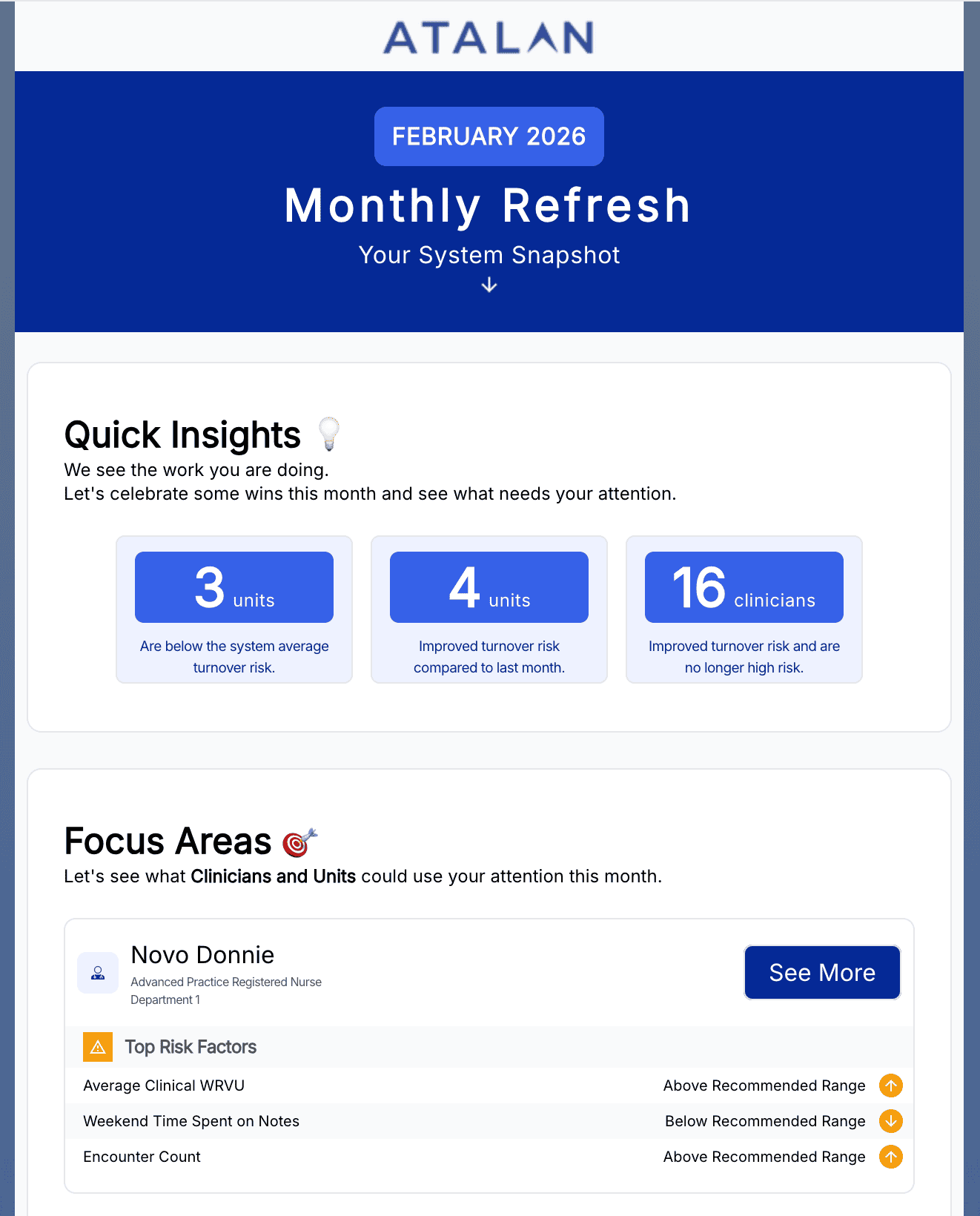
Start with a predictive snapshot
Each month, you receive an overview email highlighting key trends, wins, and emerging risk areas, so you can act before issues escalate.
Identify struggling clinicians
Our machine learning models analyze hundreds of clinical and operational signals from your EHR and HRIS to predict resignations up to one year in advance.
Reveal the why
Unlike surveys or lagging HR metrics, Atalan delivers objective insights into the specific departure triggers across individuals, departments, and service lines.
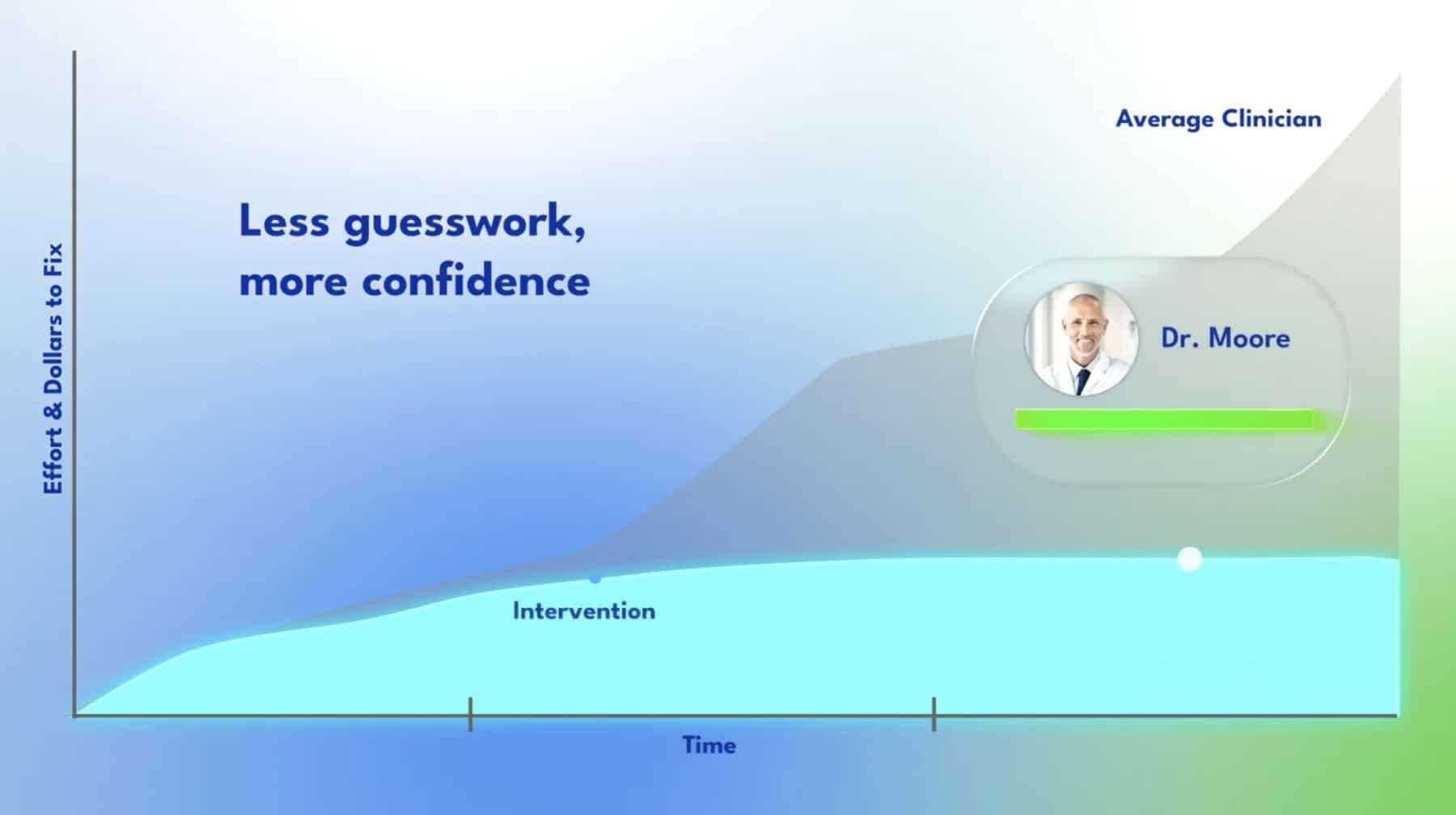
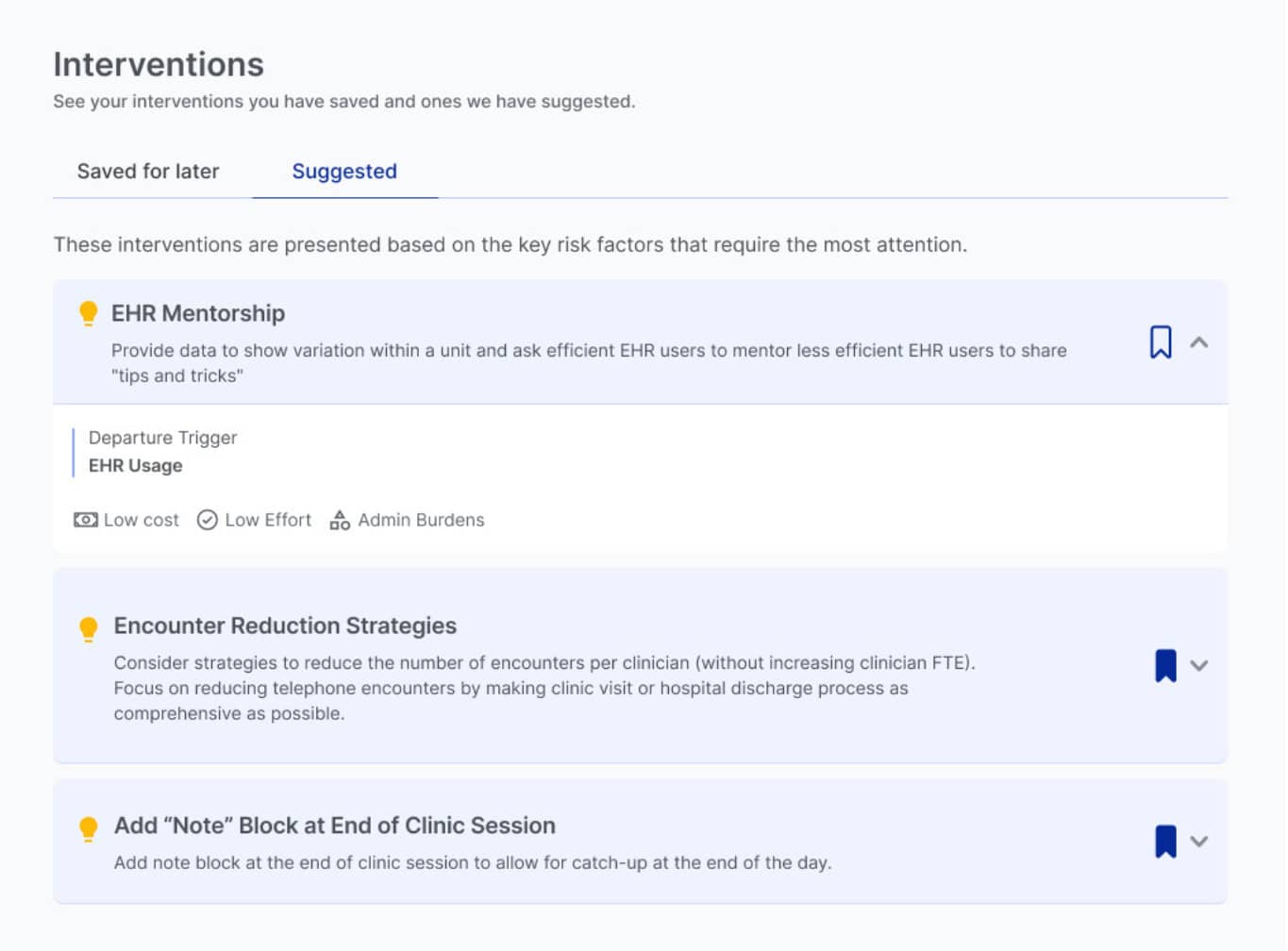
Guide proactive action
We provide targeted, evidence-based recommendations that leaders can act on immediately – from workflow adjustments to staffing realignments – and measure the impact over time.
The result: fewer resignations, more stable teams, stronger financial performance, and uninterrupted patient care.
Feasible by Design: Clinician Retention Intelligence Without the IT Burden
Healthcare leaders know clinician turnover is one of the most expensive and disruptive challenges they face. The loss of a single physician can cost between $800,000 and $2.3 million. The ripple effects, from lost patient access to reduced service line capacity, can impact an entire organization.
Many health systems recognize the need for better insight into clinician retention risk. But when new technology is introduced, the same question always comes up:
How difficult will this be to implement?
Healthcare is an industry rich with innovation, but notoriously slow when it comes to adoption. Even the most promising technologies often stall or never see the light of day because implementation is too complex, too disruptive, or too resource-intensive for already stretched health systems.
For CIOs, CTOs, and operational leaders already managing dozens of systems, the last thing they need is another complex integration project or another workflow that clinicians and leaders must adopt.
That’s why feasibility of implementation is not just a technical consideration. It’s the difference between innovation that stays on a slide deck and innovation that actually changes outcomes.
Atalan was designed with that reality in mind.
Faster Insights, Lighter Lift
Traditional healthcare technology often comes with heavy implementation requirements: complex integrations, long timelines, and major IT involvement.
Atalan’s Clinician Retention Intelligence (CRI) platform was intentionally designed differently.
The system works through one-way automated data extraction from sources that health systems already maintain, such as EHR and HR systems. There is no deep system integration needed. This means implementation does not require complex bidirectional integrations, workflow redesign, major IT resource allocation, or months-long deployment timelines.
Instead, the system simply analyzes operational and workforce data that already exists. This approach is similar to the one-way automated data extraction used by organizations like Vizient for many of their analytics programs.
The result is something healthcare leaders rarely see with new technology:
Fast implementation with reduced IT lift.
Not “One More Thing” for Leaders
Healthcare leaders are already operating under immense pressure.
CMOs are protecting patient access.
COOs are managing operational disruptions.
CHROs are trying to stabilize and support the workforce.
Service line leaders are building capacity and protecting margins.
The last thing any of them needs is another system or process that requires additional meetings, reporting, or administrative work.
Atalan was designed specifically not to become “one more thing.”Instead, it works within the existing workflows leaders already follow.
Health systems already run structured processes to monitor workforce stability and performance. These include:
-
Service line performance reviews, where leaders track case volume, staffing levels, and operational constraints
-
Physician enterprise or medical staff leadership meetings, where department chairs review workforce concerns and recruitment needs
-
Workforce planning and HR reviews, where turnover trends, engagement data, and staffing gaps are discussed
-
Operational throughput meetings, where leaders monitor access, capacity, and coverage challenges across clinics and hospitals
-
Finance and executive leadership reviews, where leadership evaluates the financial impact of staffing instability and recruiting costs
Atalan simply adds a new layer of intelligence to these existing discussions.
Instead of reviewing only historical turnover data or anecdotal concerns, leaders can see predictive signals about clinician stability months in advance.
Instead of asking:
-
“Why did this physician resign?”
-
“Why is this department suddenly facing staffing shortages?”
-
“Why did our access collapse in this specialty?”
Leaders can see risk signals months earlier.
From Lagging Indicators to Early Signals
Historically, health systems have relied on surveys, exit interviews, and lagging HR metrics to understand clinician turnover. The problem is timing. By the time strain or burnout appears in a survey or a resignation notice arrives, the damage is already done.
Today, leaders evaluate workforce stability through a number of established processes, such as:
-
Annual or semi-annual clinician engagement surveys
-
Exit interviews conducted after a clinician has already decided to leave
-
Quarterly HR or workforce analytics reviews, tracking historical turnover rates
-
Medical staff leadership discussions about recruitment gaps or morale concerns
-
Service line reviews where declining productivity or coverage gaps start to appear
These processes are valuable, but they all share a common limitation: they primarily capture problems after they have already developed. With CRI, actionable insights can come much earlier.
By analyzing hundreds of operational signals in EHR and HR data, the platform identifies:
-
Which clinicians may be at risk of leaving
-
The operational or systemic factors driving that risk
-
Recommended actions that can reduce it
During service line reviews or workforce planning meetings, for example, leaders can see which clinicians or teams may be trending toward risk months before a resignation occurs.
This intelligence is more than 70% accurate in predicting a resignation up to 12 months before it occurs. That early visibility allows leaders to intervene while solutions are still possible, protecting staffing stability, patient access, and operational performance.
A New Category Designed for Real-World Healthcare
Atalan is the first platform built specifically for CRI. The goal is not just to measure burnout or track turnover. The goal is to prevent unexpected clinician departures before they disrupt care, staffing stability, and financial performance.
But healthcare innovation only succeeds if it fits within the constraints leaders face every day.
That means:
-
Lighter IT lift
-
Enhance existing workflows
-
Actionable insight, not more data
When technology meets those criteria, it becomes something different.
Not another system.
Not another initiative.
But a practical tool that leaders can actually use to protect clinicians, stabilize teams, and safeguard patient care.
We show you the problem before it hits – and the solution to stop it.